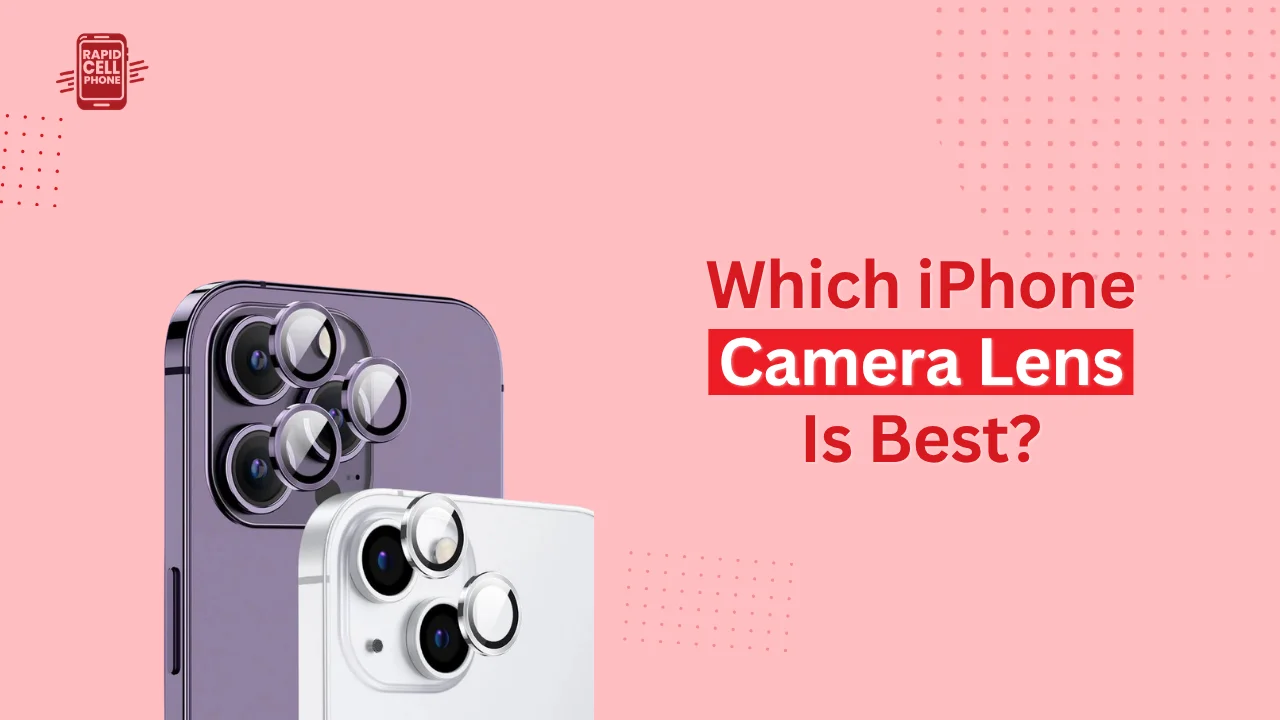

The iPhone camera lens has been developed to one of the most sophisticated smartphone camera systems in the market. Apple has continued to advance the limits of mobile photography, using superior optics with advanced computational processing. Regardless of whether you are using the camera to record some ordinary moments or produce professional-quality work, the ability to use and preserve the iPhone camera lens would greatly enhance your output.
This guide delves in detail, covering all the lens types and technology, as well as accessories such as iphone camera lens protector and iphone camera lens case.
Table of Contents
What Is an iPhone Camera Lens?
The iPhone camera lens is the optical element in the very core that directs the light to the image sensor. Although this may sound easy, the current iPhones have an extremely complex system with a combination of several lenses and software that creates the end image.
The lenses are designed to serve a particular purpose, e.g., to shoot panoramic shots or to bring objects in the background into focus. The iPhone eliminates the need of having a physical camera to take pictures because the phone increases the quality of images with the help of artificial intelligence, HDR and real-time. This combination enables even the casual users to produce high quality photos without manual settings.
Durable materials such as sapphire crystal are also used to cover the lenses in Apple. Although this provides a scratch resistance attribute, the lens is not entirely resistant to damage and that is the reason why many users consider the use of protective accessories.
Types of iPhone Camera Lenses
Wide Lens (Main Camera)
The main camera is the wide lens, which is used on the majority of the photos. It captures a natural view and works well in all types of lights. It is an everyday photography lens and is the most commonly used on any iPhone.
Ultra-Wide Lens
The ultra-wide lens is created to impress an even larger field of view. It is particularly applicable on landscapes, group shots with many people and even on architectures. Nonetheless, because it has a larger angle, some distortion can be seen at the edges of images; however, this is a normal feature of this type of lens.
Telephoto Lens
The optical zoom allows one to bring items closer with the telephoto lens, making sure that a higher quality of the image is not lost. This comes in handy especially in portrait photography where it can be useful in producing a natural depth-of-field effect and subject isolation that is flattering.
Macro and Advanced Lenses
Apple has added macro and depth sensing in more recent Pro models. These characteristics enable the user to take extreme close-ups with amazing details. These lenses, when combined with software processing, deliver the ability to do professional-level photography on a smartphone.
How iPhone Camera Lens Technology Works
Photos taken by the iPhone do not rely solely on the hardware—they rely on the software integration to a great extent. When you snap a photo, several lenses and sensors simultaneously take multiple exposures and details.
This data is then processed in real time with the help of computational photography. Smart HDR and Night Mode are technologies that analyze the light conditions and automatically adjust the brightness, contrast, and color accuracy. Stabilization of images using optical is used to minimize motion blur, with sensor-shift further enhancing sharpness particularly in low-light scenarios.
Such a smooth combination of lenses and software is what makes iPhone photography unique in comparison to lots of other smartphones.
iPhone Camera Lens Specifications by Model
The camera systems of Apple have been perfected with the release of each new iPhone. Previously used models had simpler dual-lens systems, and newer models (particularly Pro models) have triple-lens systems with more flexible zoom features.
Newer iPhones have wider apertures to enhance low-light performance, longer telephoto zoom distances, and an ultra-wide sensor. These hardware improvements can be seen in the growing size of camera modules on the back of the iPhones, enabling increased image quality and sophistication.
Knowing the lens capabilities of your particular model can assist you in utilizing the capabilities of the model better and in understanding what extra accessories are needed.
What Is an iPhone Camera Lens Protector?
An iphone camera lens protector is a device meant to shield the surface of the lens with a transparent protective film. It is normally created out of tempered glass or composite substance and functions as a shield against scratches, dust, and small impacts.
They come in various styles, such as full-module covers that safeguard the whole camera, or single lens protectors that cover each lens individually. They are relatively cheap, but their success depends, to a large extent, on the quality of the material employed.
An effective protector is not opaque and it leaves out the image quality, but a poorly constructed protector may add glare or decrease sharpness.
Do You Really Need an iPhone Camera Lens Protector?
The use of the lens protector is contingent on how you use it. When you often keep your phone on uneven surfaces or when you carry it without a covering, you will tend to have your lens scratched in the long run.
Conversely, the lenses of the iphone are already equipped with hardwearing substances and therefore, cautious users might not need extra protection. Nevertheless, replacing broken camera lenses may be expensive and a protector is a viable preventive.
The key is to choose a high-quality product. Inexpensive protectors tend to degrade the quality of photos whereas the costly ones are meant to be almost invisible in the course of use.
iPhone Camera Lens Case vs Lens Protector
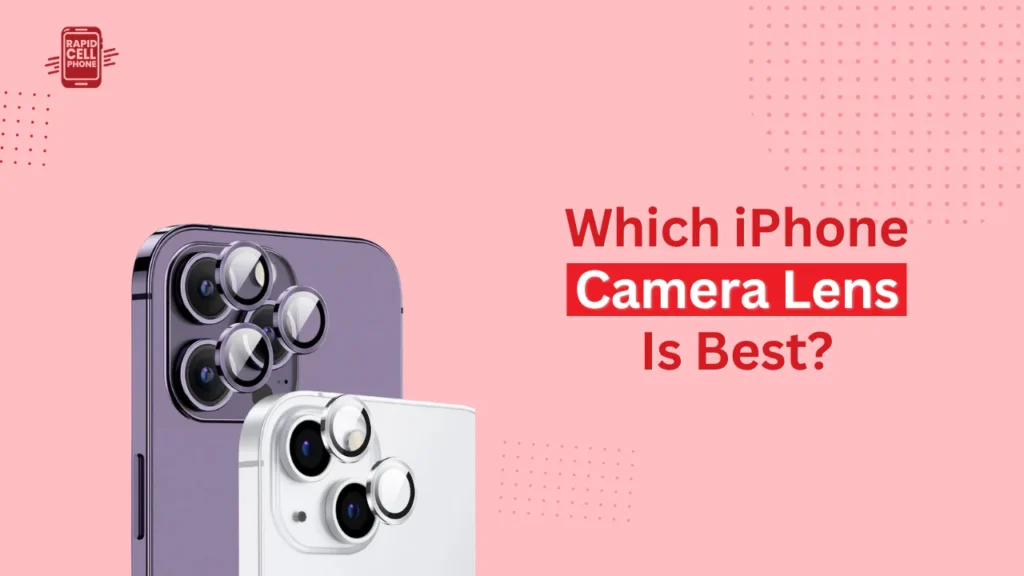
Instead of iphone camera lens case and lens protector are not the same. Rather than coating the lens itself, it offers a notch around the camera module to ensure that it does not come in contact with surfaces.
This form of protection will work against drops and overall wear, but not completely against direct scratches on the lens or scratches, as well as debris. Conversely, a lens protector is placed on the top of the lens, and it provides more specific protection.
To be as safe as possible, a combination of both solutions is usually the best method to be used by the users. A protective case will minimize the risk of impact, and a lens protector will minimize the risk of a scratch.
Best iPhone Camera Lens Accessories
The accessories are able to improve the performance of your iPhone camera lens greatly as well as its lifespan. External lenses, such as those from LensCrafters, are lenses that attach to your phone and can offer new features like longer zoom or film effects. These particularly come in handy with photographers and content creators seeking greater degrees of control over their creations.
Another thing that is considered to protect the camera is lens protectors and high quality cases. An accidental damage can be prevented with a well-designed case having a raised camera bump, and the optical surface should be clean and without any scratches with the help of a reliable lens protector.
The selection of the appropriate accessories is based on what you require, be it protection, improved photography or both.
How to Choose the Best iPhone Camera Lens Accessories
The choice of the appropriate accessories should be detailed. It is essential that the iPhone models are compatible, with the layout of the cameras being slightly different. An improperly fitted accessory may not fit properly with the lens and will influence the quality of the image.
The quality of the materials is also important. Anti-reflective glass of high grade will make sure that photos are clear and devoid of distortions. Also, the use of familiar brands minimizes the possibility of performance problems.
The end product is to improve your camera experience without sacrificing the quality that iPhones are credited with.
Common Problems with iPhone Camera Lenses
iPhone camera lenses are durable, but may develop problems with time. The most frequent issue is scratches, which can be inflicted by hitting hard surfaces or objects, such as sand. Smudges or even fingerprints as small as they are can influence the clarity of images, causing photos to be blurred or hazy.
Lens flare may be experienced during bright conditions and mostly when the lens surface is not clean. Personally, users might also suffer within the realms of autofocus problems, in which they can be attributed to physical damages or software malfunctions.
Most of these issues can be avoided through regular maintenance and by handling them appropriately.
How to Clean and Maintain Your iPhone Camera Lens
One of the easiest methods of enhancing the quality of photos is to maintain your iPhone camera lens clean. Microfiber cloth is the least harmful device to use in cleaning fingerprints and dust without scratching the surface.
A little lens-safe cleaning solution may be used, should it be necessary, but no harsh chemicals. Washing must be performed with care since too much pressure may end up ruining the lens coating.
Regular cleaning will guarantee that your camera is in good condition and will give you good sharp images.
Tips to Improve iPhone Camera Lens Performance
Nice photography can be achieved without necessarily buying new equipment. It can be a big difference to know how to use your existing lenses to advantage.
Lighting is very important in quality of the image and therefore using natural light is better in most cases. Changing lenses depending on the scene is useful in getting the right view, and not over-zooming on the digital zoom will retain the quality of the image.
Also, maintaining the lens clean and trying manual camera applications can open up even more creative opportunities.
Final Verdict
An iPhone camera lens is made to provide excellent shooting performance, yet it is highly dependent on maintenance. If you care about protecting the camera for as long as possible, combining both iphone camera lens protector with an iphone camera lens case. If you have a passion for photography, then getting external lenses can be your choice as it allows taking unique pictures.
FAQs About iPhone Camera Lens
Does iPhone camera lens scratch easily?
Even though the lens is manufactured using strong material, it is not entirely scratchproof and may get scratched when exposed to some elements.
Do lens protectors affect photo quality?
While high-quality protectors don’t affect image quality at all, some poor-quality products may create some glare and decrease picture sharpness.
Is a lens case better than a protector?
Both cases provide their own protection, as lens protectors prevent scratching, whereas a case helps to prevent any hits to the lens surface.
Can you replace an iPhone camera lens?
Yes, you can do it, although repairing the lens is quite costly and depends on your iPhone model.
0 Comments