
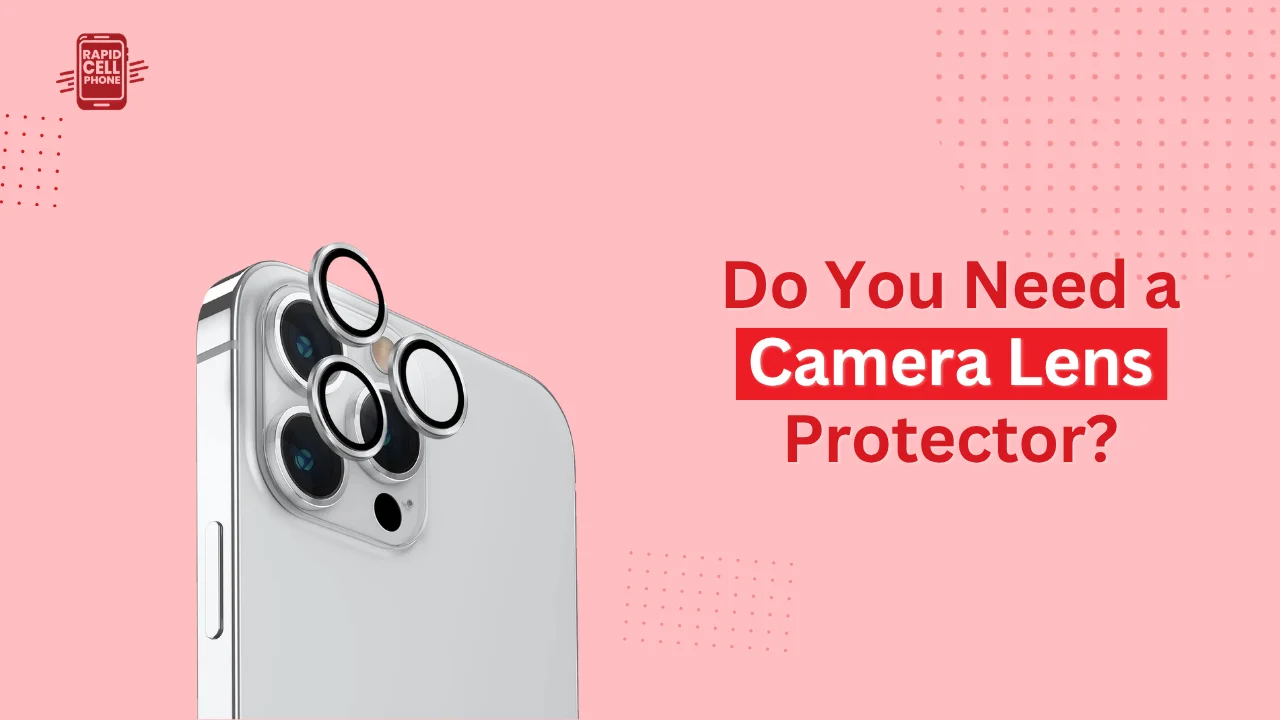

In a world where photography is a way of life, your camera lens has become one of the most valuable- and most vulnerable- elements of your gadget. Be it a smartphone or a professional DSLR camera, a small scratch can have an impact on the clarity, focus and the overall quality of the image.
A camera lens protector is an apparatus that is meant to address this very issue. However, not every protector is the same and sometimes it is possible to do more harm than good when choosing the wrong one. This detailed tutorial is a guide to all you should know and that includes materials and performance as well as real-life application and professional advice.
Table of Contents
What Is a Camera Lens Protector?
A camera lens protector is a transparent film which is specifically designed to cover your camera lens to prevent scratching, cracks, dust and smudges. Although it might appear to be a mere accessory, its use is essential in ensuring a long-term performance of the camera.
In the case of smartphones, these is often crafted out of tempered glass or sapphire material, designed to be very thin and yet retaining high levels of transparency. DSLR cameras, on the other hand, have external filters, which are UV filters or clear filters and this filter is attached on the front side of the lens and acts as a protective filter.
The point is very simple, rather than risking to break your expensive lens, you lose a replaceable layer.
Why You Need a Camera Lens Protector
Protection is not the initial consideration made when designing modern devices, at least not with regards to cameras. The lens of smartphones can easily be exposed to direct contact with surfaces because the lenses stick out on the back side. In the same way, DSLR lenses are left to the surroundings during the shooting.
Risks are inevitable even in normal everyday practice. Leaving your phone on the table, keeping it in your pocket with keys or taking your camera outside can wear down the lens surface over time. This results in micro-scratches that make sharpness and clarity less sharp and clear as time progresses.
It is not only inconvenient but also costly to repair or replace a broken lens. The price of repairs may be moderate to extremely high in most cases depending on the device. A lens protector is a preventative measure that helps you save money and your photo quality.
Types of Camera Lens Protectors
Tempered Glass Protectors
The most common material in using as a protective lens on a camera is tempered glass. It provides a good combination of durability, clarity, and affordability. These shields are made stronger chemically to withstand scratches and low impact, and are commonly with a hardness rating of 9H. This type is adequate in protecting most users without compromising on photo quality.
Sapphire Lens Protectors
Sapphire protectors are regarded as an upscale option. Being extremely hard, they are extremely resistant to scratches even of such sharp objects as keys or sand particles. They are more durable, but more costly and are mostly applied by users who are willing to pay the price to offer optimal protection.
Plastic Film Protectors
The simplest type of protection is plastic films. They are cheap and light and not as durable as glass or sapphire. They can be used to defend against small scratches, but not in the long term or with heavy usage.
Metal Ring Protectors
The metal ring protectors are created to cover the edges of the lens and not the glass itself. They are usually coupled with glass covers to ensure complete protection. Although they make them look cool, they are not very protective when used independently.
iPhone Camera Lens Protector: What You Should Know
The camera lenses of the modern iPhones are especially susceptible to the design. Having more than one lens and a high-rise camera bump, there is a high probability of direct contact with surfaces.
An iphone camera lens protector is particularly convenient to those who have the habit of placing their phones on smooth surfaces or move around a lot or simply use their phones a lot in photography. Even little scratches can impact such advanced features as night mode and portrait photography without protection.
Detailing is extremely important when choosing an iPhone protector. The protector has to be extremely thin so as not to interfere with camera sensors. It must also be able to assist with night photography without glare or reflection. Another crucial aspect is compatibility with phone cases, poorly fitting protectors may lift or become misaligned.
DSLR Camera Lens Protector: A Different Approach
DSLR cameras need another kind of protection as opposed to smartphones. Photographers apply external filters as a shield to the lens instead of attaching a layer to the lens.
A dslr camera lens protector is usually in the shape of UV filter or a transparent protection filter. These filters screw on the front side of the lens and they are used in various ways. Other than preventing scratches, they also prevent dust, moisture and other environmental damages.
Professional photographers usually do not only use these filters in order to protect them but also in order to preserve the resale value of their lenses. As the quality of DSLR lenses may be costly, it is important to safeguard the front element.
Do Camera Lens Protectors Affect Photo Quality?
This has been among the most controversial issues amongst users. The reason is explainable- it may appear that adding an additional layer over a lens would cause light to be obstructed.
The truth is that the effect all depends on the quality of the protector. Quality protectors are manufactured using newer coats that are important to keep the product in a near perfect transparency. They enable light to go through without being distorted so that your photos will be sharp and clear.
However, poor quality protectors may cause such issues like glare, loss of sharpness, and unwanted reflections, particularly when shooting in low-light or night. That is the reason why it is necessary to select a good product.
How to Choose the Best Camera Lens Protector
When choosing the appropriate camera lens protector, one must go beyond the cheapest one that he or she finds. There are a few factors that contribute to the performance and reliability.
Optical Clarity
The ideal protector must not be noticeable. Good light transmission, your photos will not have haze or distortion and they will preserve their original quality.
Material Quality
Durability and performance depends on the material. Tempered glass is a good balance that offers maximum resistance to scratches, and sapphire has maximum resistance.
Thickness and Fit
Thickness has a direct impact on usability. An overly thick protector can cause interference with the quality of the image whereas a thin protector can fail to offer enough protection. Fit is also essential to make sure it covers completely without misfitting.
Protective Coatings
Enhanced finishes like oleophobic and anti-reflective finishes enhance usability through minimizing fingerprint and glare.
Common Mistakes to Avoid
It is the assumption of many users that all protectors are equal which in many cases results in poor decisions. Purchasing protectors that are so cheap that they cut clarity is one of the most typical errors. The other problem is the non-consideration of compatibility that may lead to incorrect fitting and low efficiency.
Another factor that is ignored is thickness. Although heavier glass might be considered to be more protective, it may lead to poor performance of the camera. Learning about these things helps to prevent the undesirable issues.
How to Install a Camera Lens Protector Properly
Installation is important in order to get the best outcomes. A good protector will not be effective when installed improperly.
The first step is to clean the lens using a lot of water to remove fingerprints and dust. A microfiber cloth will make sure that no residue is left behind. The protector should be carefully aligned prior to its application because repositioning can cause bubbles or dust particles.
After this is put on, a slight pressure is used to fix the protector. The protector, when installed properly ought to look smooth and not having any air bubbles.
Pros and Cons of Camera Lens Protectors
There are various benefits of using a camera lens protector especially with regards to cost and convenience. It is a relatively cheap and easy method of avoiding scratches and damage.
Protectors are not all the same though. Poor choices can cause visual problems like glare or lack of clarity. Knowledge on the trade-offs can be used to make an informed choice.
Are Camera Lens Protectors Worth It in 2026?
The usefulness of a camera lens protector will be determined by the manner in which you will utilize your device. The advantages are obvious to users who use the camera extensively either in the creation of content, traveling, or even in their workplaces. Antiscratch and anti-damage protection guarantees stable operations with time.
Conversely, it might not be necessary to users who seldom use their camera or already have heavy-duty protective cases.
In general, a camera lens protector can be a sensible and affordable purchase to most individuals. It gives you a sense of security and also maintains the quality of your photos.
Final Thoughts
A camera lens protector can be a small item, but its effect is enormous. It secures one of the most sensitive components of your device and contributes to maintaining the long-term performance.
Either on an iPhone or DSLR, having the correct protector will mean that you do not lose any time on taking a sharp and high quality picture with your camera.
FAQs About Camera Lens Protectors
Do camera lens protectors reduce quality?
Protectors of high quality preserve the image quality, whereas low-quality ones may lead to glare or distortion.
Is an iphone camera lens protector necessary?
Not obligatory, but it greatly decreases the risks of scratches and damage.
What is better: tempered glass or sapphire?
Sapphire has better resistance to wear and tear, yet tempered glass is more economical to the majority of users.
Can DSLR lenses use protectors?
Yes, the DSLR lenses are provided with external filters such as UV or clear filters.
How long does a camera lens protector last?
It is dependent on usage although most last several months to a year before replacement is required.
0 Comments