

The modern communication systems are based on network devices. Whenever you get online, transfer a file or watch a video, a number of network devices collaborate with each other behind the scenes to provide a seamless flow of data.
These are devices deployed in homes, offices, data centers and cloud systems to link computers and efficiently control data flow. It is in the digital world that communication among systems would not exist without network devices.
Table of Contents
What Are Network Devices?
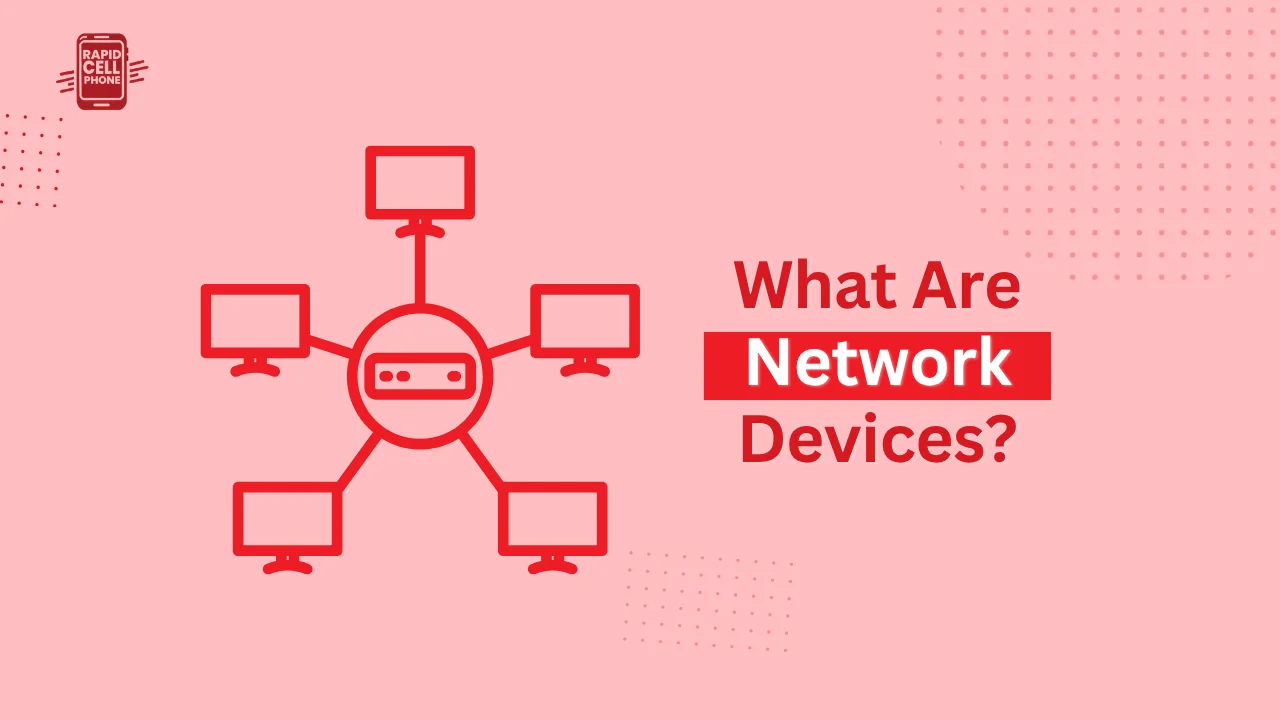
Network devices: Network devices are physical hardware that facilitates communication, transfer of data, and connectivity between networks and computers.
They help in:
- Transmission and reception of data packets.
- Interconnecting devices in a network.
- Controlling inter-system traffic.
Simply put, network devices are intermediaries that ensure that data is delivered to the right destination in an efficient and safe manner.
Types of Network Devices
There are various kinds of network devices and each device has its purpose in a network. Knowing them is significant to develop effective and scalable systems.
Repeater Network Device
A repeater network device is employed to re-create and amplify a weak signal in a network. Signals may get weak or distorted when data is transmitted over a long distance. A repeater is the solution to this issue, as it increases the signal strength and the communication range.
The repeaters are often used in large buildings, campuses, or other locations where Wi-Fi or cable signals require expansion. They operate at the physical layer, and they do not alter the real data–just the signal strength.
Gateway Network Device
A gateway network device is used to provide an interface between two separate networks which might be using different protocols or architectures. It converts data in a manner that the two networks are able to understand and communicate with each other.
Indicatively, in the case of a local network being linked to the internet, the gateway will facilitate an effective flow of communication between the internal networks and the external servers. It is common in the enterprise systems, cloud networks and hybrid infrastructures where several networks have to interact.
Network Storage Device
A network storage device is a centralized device where data can be stored, accessed and managed by multiple users and devices on a network. The most popular ones are NAS (Network Attached Storage) and SAN (Storage Area Network).
Such devices are needed in businesses since they enable:
- Centralized file storage
- Simple data continuity and recovery.
- Multiple user access.
- Scalable storage management is secure.
Organizations that deal with huge volumes of data have been known to use network storage devices.
Router
The router is one of the most important network devices that routing data packets between networks is made possible by the use of IP addresses. It makes sure that the data achieves its intended destination via the most appropriate path.
Routers are usually applied both at home and in business to provide access to local networks to the internet. The routers with advanced features offer security and traffic controls.
Switch
A switch links several devices in the same network and transmits data using MAC addresses to only send data to the intended recipient. This enhances speed and efficiency in communication than the old devices such as hubs.
Switches find extensive application in office networks and data centers where numerous devices require a stable connection.
Hub
A hub is a simple networking device which transmits information to all the devices in the connection. It lacks intelligent filtering and routing of traffic like switches, and thus is less efficient and is mostly obsolete in the current networks.
Bridge
A bridge is used between two distinct network segments and it is used in the effort to reduce traffic by filtering data. It enhances performance through the division of big networks to small manageable segments.
Modem
A modem performs the conversion of digital signals into analog and the reverse. It is mandatory in the internet connectivity because it links a local network to an internet service provider.
Access Point
Access point enables wireless devices to have access to a wired network. It is normally applied to expand Wi-Fi coverage within homes, offices, and other areas.
Firewall
Firewall is a security oriented network equipment that monitors and regulates the incoming and outgoing network traffic. It secures systems against unauthorized access, malware, and hackers.
How Network Devices Work Together
In the real network environment, more than one device is used to enable smoothing of communication.
As an example, a router is used to connect a home network to the internet but a switch is used to share data among various devices such as computers and printers. A repeater can enhance the range of the signal, and a gateway is used to guarantee communication among the types of networks.
This will give a complete functioning and efficient network system.
Key Differences Between Network Devices
Router vs Gateway Network Device
A router is used to send data within and between networks based on IP addresses and a network device known as a gateway is used to convert data between various protocols and networks. Gateways are superior and multifaceted to routers.
Switch vs Hub
A switch transmits information to the relevant device only thus faster and efficient. A hub on the other hand transmits data to every device and this may slow the network.
Repeater vs Access Point
A repeater is the one that intensifies the signal power whereas an access point provides a point of a wireless connection where devices can be connected to a network.
Network Storage Device vs Local Storage
A network storage device also enables more than one user to access data over a network whereas local storage is restricted to one device.
Real-Life Applications of Network Devices
Network devices are deployed in nearly all digital settings. At home, they facilitate the internet and smart devices. They are also used to handle communication inside the business between servers and employees and between the business and the cloud. They are used in data centers to support huge load of traffic and provide security and reliability of the data.
Advantages of Network Devices
Network devices enhance the speed of communication, enable centralized control of data and increase security. They also enable networks to become scalable such that the networks can expand to meet the growing needs without significant structural adjustments.
Challenges of Network Devices
Although network devices have advantages, they may have problems like complexity in configuration, compatibility, and security threats, and performance bottlenecks in large networks.
How to Choose the Right Network Devices
The selection of the appropriate network devices is determined by the network size, the speed required, security, and future expansion. Simple routers and switches might suffice in small systems, whereas in large businesses, sophisticated gateways, storage and firewalls are necessary.
Conclusion
Modern communication systems use network devices which are indispensable. Whether in a simple setup in a home or a complex structure in the enterprise, they facilitate seamless, secure and efficient transmission of data in all digital settings.
FAQs About Network Devices
What are network devices in simple words?
Network devices are hardware that serve to connect and communicate computers and other devices. They control the flow of data across networks in order to make information flow in the right direction and effectively.
What is a gateway network device used for?
A gateway network device is applied to connect two dissimilar networks that can have varying communication protocols. It converts data to enable both networks to comprehend each other and hence communication between systems such as local networks and the internet is possible.
What is a network storage device?
Network storage device refers to a centralized storage system that can be accessed by numerous users to store and access data via a network. It is widely utilized in file sharing, backup and secure data management both at home and business.
Why do we use a repeater network device?
The repeater network device helps in amplifying weak or broken signals within a network. It expands the communication distance such that the data may travel further without diminishing the power and quality.
What is the difference between a router and a gateway network device?
A router routes the data packets across networks based on the IP addresses whereas a network gateway device converts the data between network protocols. The gateways are more sophisticated as they permit communication between entirely diverse systems.
0 Comments